
In the week that children in England have sporadically returned to school, various reports state that pupils are up to three months behind where they should be. There are calls to cancel next year’s exams to help them catch up, enthusiastically supported by Molesworth, Just William and the cast of Grease, soundtracked by Pink Floyd.
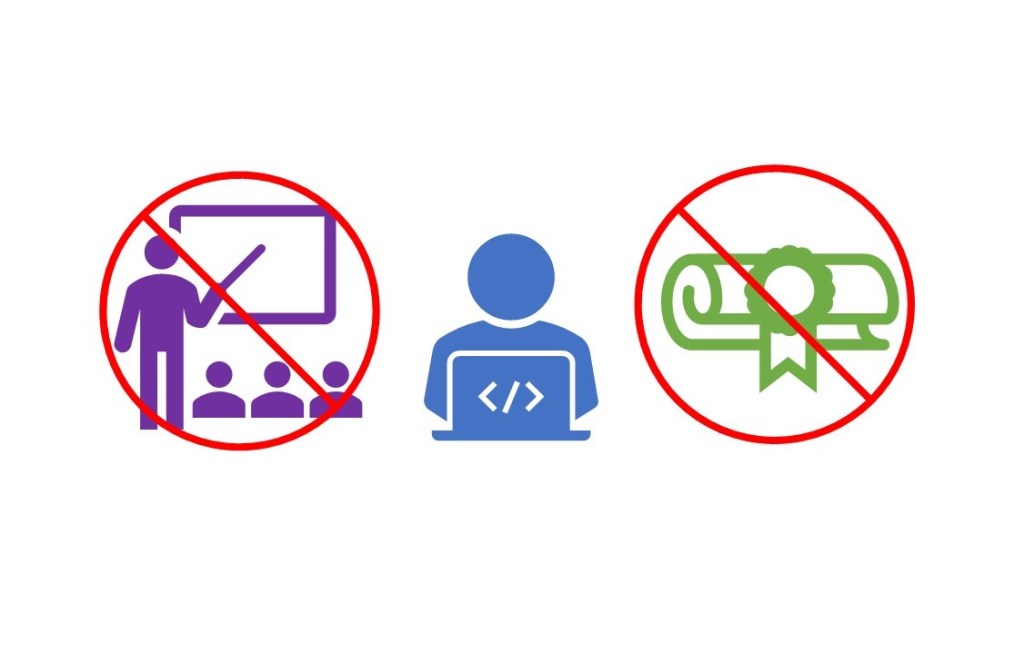
In the business world, one of the first budgets to disappear (after IT) is the mythical training budget. I call it mythical because, in most organisations I have known, it has always been “without foundation in fact; imaginary; fictitious”. You may find that the costs are put into the annual budget to meet HR box-ticking, but the chances of you actually receiving some meaningful, paid knowledge transfer during the year are minimal.
During good times (apparently they have happened pre-COVID, but no one can remember that far back), you will almost certainly be busy and your manager will not be keen to release you if there are projects to be delivered. They will flatter you by saying you will pick the skills up on the job, as you are so bright/intelligent/gullible* (*possibly not to your face). You will be too busy to complain, so nothing much will happen. At the end of the year, if the budget has to be seen to be spent, the managers will find some general, inane ‘life skills’ course and get you all to attend a tedious team building event that involves planks, rope and rain. See There is No IT in Team
In tighter times like this year, the budget will shrink or be forgotten. If you’re not busy, you will nervously look at your Teams chats and pound on your keyboard for all you are worth to look as if the world depends on you. Particularly, if your b’stard company has implemented 1984-style Big Brother monitoring on your laptop. The thought of raising your virtual hand and asking for training would be seen as a ‘sack me’ signal, revealing that: a) you are not currently adding any value; and/or b) you are lacking in useful skills. Managers, in turn, will be trying to show that they can manage budgets (because, let’s face it, that is all they seem to be doing with their time) by not spending.
However, there are three exceptionally good reasons for managers to continuing to invest in skills.
Motivation: Being sent on an (at least partially relevant) course is a great motivator for staff; in that it proves that they are seen as an asset by your company. You are investing in them and saying that they have a future with you. Refusing or cancelling training has the opposite meaning; they will feel like Sir Alan Sugar is pointing at them. Also, block booking all your staff on a set of generic online webinars to add to their 8 hours a day of, er, online conferences is unlikely to cheer them up.
Productivity: Even the most experienced staff can benefit from updated knowledge, skills, and inspiration. A good training course will make them more effective and this improvement will last for several months. If you need to get more out of your staff (e.g. because you’ve sacked their colleagues), this will help ensure your key staff (i.e. the ones you’ve kept) are doing more, in less time, at lower cost.
Flexibility: In the current market, where the normal rules have broken down, you need your staff to be able to cope with whatever is thrown at them. With the right education, training and mentoring support, you can ensure that they and your business become more agile, and able to track and manage these changes to be able to survive the year.
You should consider training to be an investment to reduce waste. However, make sure it is relevant, specific and tailored to the needs and ability of your staff. Otherwise the training itself will be as effective as the KLF burning £1M in cash as performance art.
Mentoring is the next step after training to ensure that the skills learnt are best applied back in the workplace. It differs from consultancy in that, rather than doing the work, the mentor advises, corrects and reinforces behaviour. Sounds cushy, but all the leadership gurus (including me) consistently promote mentoring as the most effective way to improve performance of key staff. Just make sure the mentor actually has the experience as well as the skills required, and isn’t a Type 2.
And finally, I couldn’t resist the old chestnut: What is the difference between education and training? You probably don’t react if your child comes home from school and says: “We had sex education today.” You’ll react differently if they say: “We had training in sex today!”
John “Obi Wan” Moe
 Recycled Bullsh-IT
Leave a comment